
Quick process
- 1
Open the right note
Choose the source that contains the lecture, document or meeting you want to question.
- 2
Ask one specific question
Name the topic and the kind of answer you need instead of asking for a generic summary.
- 3
Follow the evidence
Check the answer against the saved note and original source when the detail matters.
- 4
Turn gaps into review prompts
Save difficult concepts as questions for your next quiz or flashcard session.
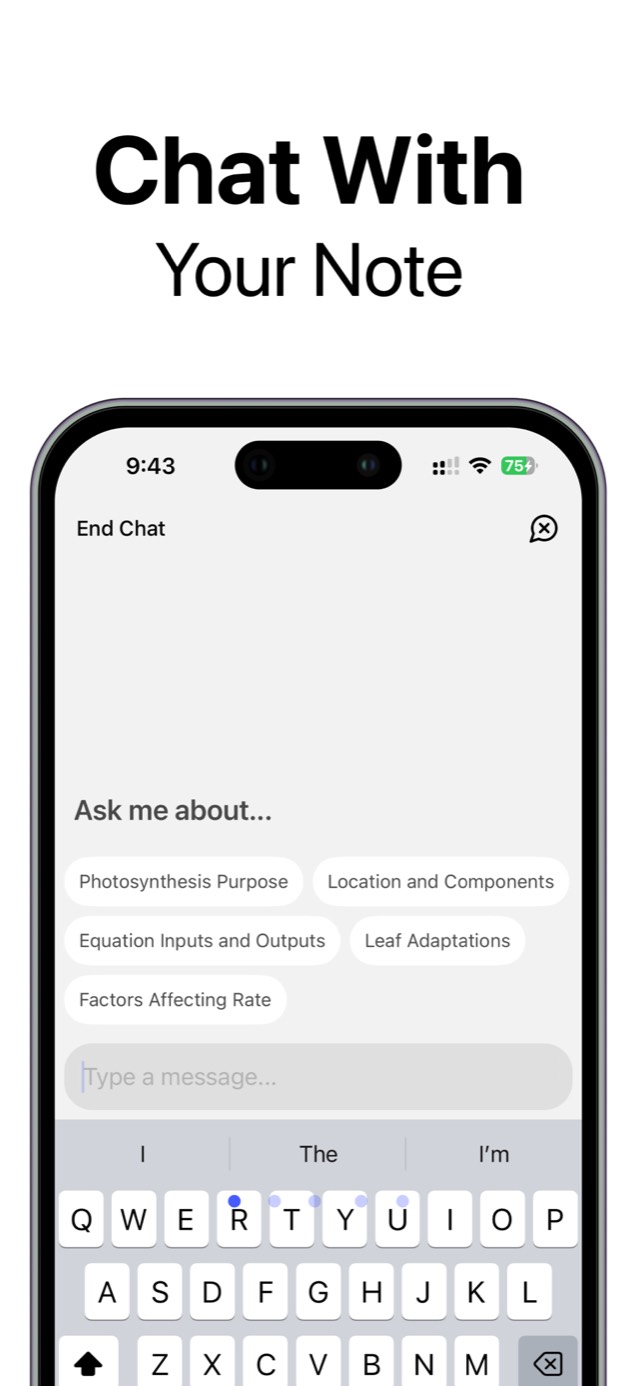
Ask a bounded question
“Explain everything” usually produces a broad answer. Name the concept, scope and format instead: “Compare the two causes discussed in the second half of this lecture” or “List the agreed next steps and their owners.” The note gives the chat a boundary that a general web assistant does not have.
If you do not know where to begin, ask for the main topics first. Choose one topic and narrow the next question. This creates a short path from orientation to detail.
Use follow-up questions to test understanding
After receiving an explanation, ask for an example from the note or request the difference between two nearby ideas. Then explain the concept in your own words and compare your version with the source.
For study material, ask the chat to question you rather than simply restate the answer. Retrieval shows what you know. Reading a fluent explanation can feel productive even when very little sticks.
Try it with your own source
Create the note in VoiceLog
Verify answers that carry consequences
A note chat can inherit transcription mistakes or missing context. Check names, figures, quotations, dates and decisions against the original recording or document. Do the same for any statement you plan to cite or send to another person.
If the answer is not supported by the note, treat it as unknown. Rephrase the question, inspect the source, or add the missing material. Do not turn a confident tone into evidence.
Build a searchable learning trail
Give notes clear titles and keep related material under consistent topics. Good organization improves both manual search and the questions you can ask later. VoiceLog’s organized notebook view helps separate courses, projects and subject areas.
End a chat by writing down what changed: a corrected misconception, a decision you found, or a question that remains open. That small record makes the conversation useful after the chat window closes.
When several notes cover the same subject, ask the same question of each one before combining the answers. This helps you see whether sources agree, use different definitions or address different periods. Preserve those differences in your final summary instead of forcing every source into one answer.
Questions about this workflow
What can I ask an AI note chat?
Ask for definitions, comparisons, examples, decisions, action items or explanations grounded in the selected note. Specific questions produce more useful answers.
Can a note chat give a wrong answer?
Yes. It can reflect errors in the source note or infer more than the source supports. Verify important details against the original recording, video or document.