
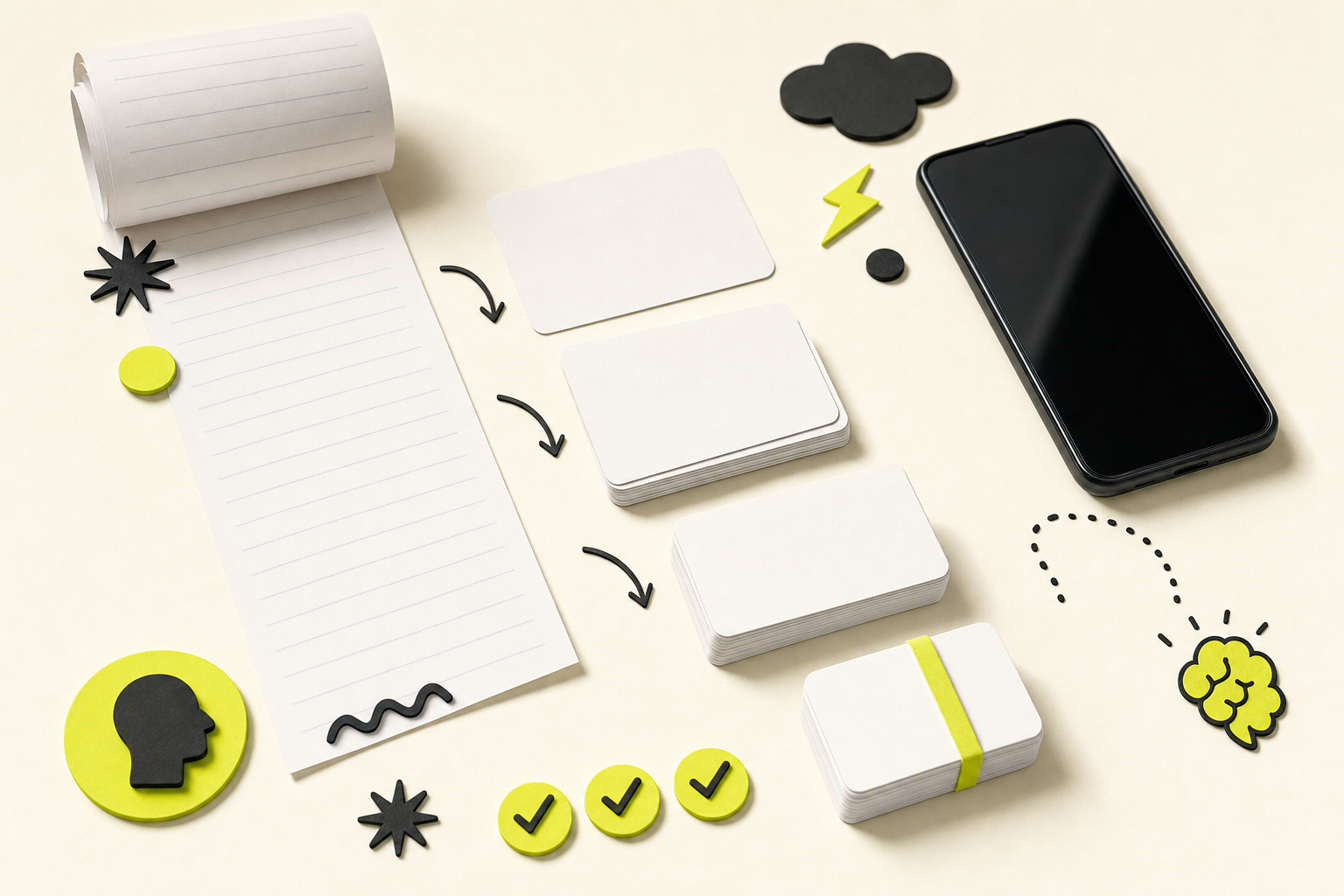
Quick process
- 1
Choose one finished note
Check the source note for errors before generating cards from it.
- 2
Generate a first set
Use VoiceLog to create flashcards from the note’s main ideas.
- 3
Edit for active recall
Keep one idea per card and replace vague prompts with specific questions.
- 4
Review and prune
Test yourself, fix weak cards and delete facts that do not support your learning goal.
Start with accurate source notes
Flashcards repeat whatever you give them. If the note contains a wrong date or confused definition, repetition makes the error harder to unlearn. Check the note against the lecture, PDF or video before generating the deck.
Mark the concepts your course or project actually requires. A card should serve a decision, explanation or exam objective. Interesting trivia can stay in the note without entering the review queue.
Write prompts that make you retrieve
A weak card asks whether a statement looks familiar. A strong card asks you to produce the answer. Replace “Read this definition” with “What is X, and when is it used?” For a process, ask for the next step or the reason behind the sequence.
Keep one main idea per card. If an answer contains six unrelated bullets, split it. Shorter answers are easier to judge honestly and easier to schedule for another review.
Try it with your own source
Create the note in VoiceLog
Use AI-generated cards as a draft
Open a VoiceLog note and create the flashcard set. Read every card before the first session. Fix ambiguous wording, add context to prompts that could belong to several topics, and remove duplicates.
Keep a few application cards alongside definitions. Ask yourself to choose a method for a scenario, explain a result or compare two approaches. Those prompts reveal whether you can use the idea rather than recite a sentence.
Review in a loop that stays manageable
Study a small batch, answer aloud or in writing, and mark the result before looking. Revisit missed cards sooner and place well-known material farther apart. The schedule matters less than the honesty of each attempt.
Prune the deck every week. Merge duplicates, rewrite cards that repeatedly confuse you and remove facts that no longer matter. A smaller deck of precise questions usually beats hundreds of generated prompts.
Mix new and old cards during a review. A deck grouped by chapter can give away the answer through context, while a mixed session makes you identify the topic as well as recall the fact. Keep related cards linked in the underlying note when you need the wider explanation.
If one card keeps failing, return to the source note. The problem may be a missing explanation rather than weak memory, and rereading the surrounding example can repair it.
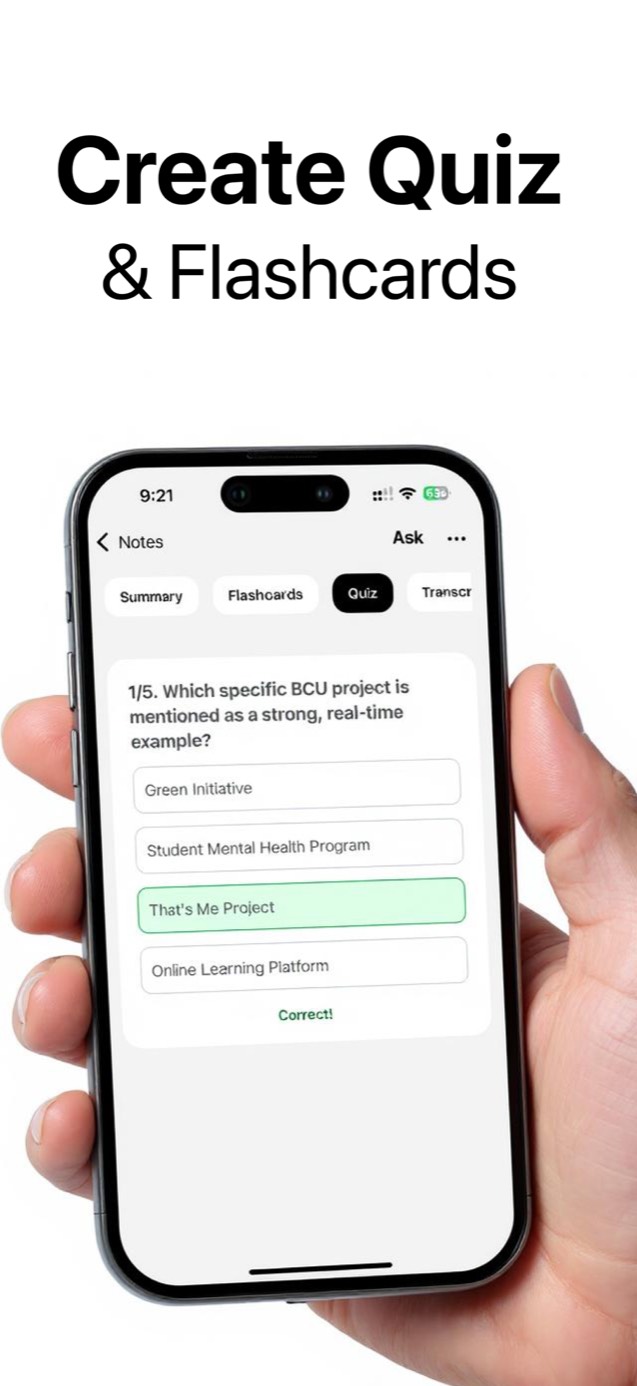
Questions about this workflow
Can AI generate flashcards from my notes?
Yes. VoiceLog can create a first flashcard set from a saved note. Review every card for accuracy, clarity and relevance before studying it.
How many facts should go on one flashcard?
Aim for one testable idea. Split long lists or multi-part explanations so you can tell exactly what you remembered and what needs more work.